The Indian family lifestyle is a vibrant and dynamic entity that reflects the country's rich cultural heritage and its people's resilience and adaptability. While traditional family structures and values are still cherished, modernization and urbanization have brought about changes in family dynamics and daily life. Through stories of Indian family life, we can gain a deeper understanding of the challenges and joys of family life in India and appreciate the diversity and complexity of this fascinating country.
In a joint family, the elderly members, often grandparents, play a vital role in passing down traditions, values, and cultural heritage to the younger generation. They are revered for their wisdom, experience, and guidance, and are often sought out for advice and counsel. video title neighbor bhabhi bathing outdoor sp hot
A typical day in an Indian family begins early, with morning prayers and rituals, followed by a simple yet nutritious breakfast. The family then disperses to attend to their daily chores, with the men often heading out to work or school, while the women manage the household and take care of the children. The Indian family lifestyle is a vibrant and
India, a land of diverse cultures, traditions, and values, is home to a unique and vibrant family lifestyle that is woven into the fabric of its daily life. The Indian family, a cornerstone of the country's social structure, is a dynamic and evolving entity that reflects the nation's rich heritage and its people's resilience, adaptability, and warmth. In a joint family, the elderly members, often
In India, the family is considered a sacred institution, and the concept of family is deeply ingrained in the country's culture and tradition. The traditional Indian family, known as a "joint family," typically consists of multiple generations living together under one roof. This setup fosters a sense of unity, cooperation, and mutual respect among family members.
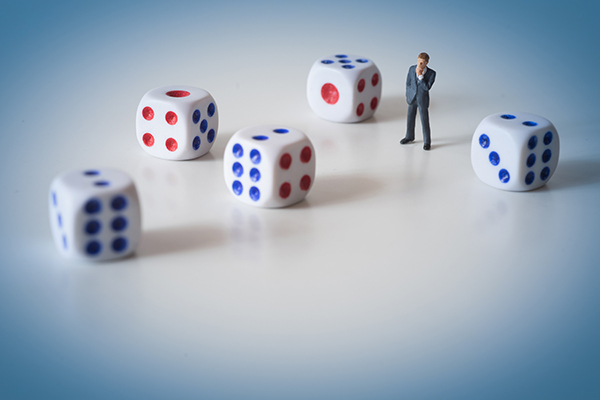
Probability calculations that can be used to inform decisions and manage risk can be very complicated. This unit is designed to help build your foundational understanding of probability and introduce you to some of the techniques that are used to calculate very difficult probabilities. You will continue to work with the Games Fair interactive tool and be exposed to real world situations to start to realize the impact of probability in your world.
The focus of this unit is on Probability Distributions. You will learn how to display all of the outcomes of a probability situation in a table and a bar graph. You will learn some formulas that will work with some situations. A large part of the unit will be calculating the expected value, or average, of a probability situation. The Games Fair Interactive tool will be used throughout the unit and will provide a focus for the summative and lead up to the Culminating Assignment, the Games Fair.
Probability calculations that can be used to inform decisions and manage risk can be very complicated. This unit is designed to help build your foundational understanding of probability and introduce you to some of the techniques that are used to calculate very difficult probabilities. You will continue to work with the Games Fair interactive tool and be exposed to real world situations to start to realize the impact of probability in your world.
After much work to collect valid and reliable information in the form of statistics, you will learn to analyse the statistics to make conclusions that can help make decisions. You will explore one real and two variables statistics using the World Map Interactive tool. A data set used will include a perceived quality of Health Care across Canada. The unit summative will be require you to act as a consultant for a large Canadian franchise to help them make a decision.

In Unit 3 of this course, you demonstrated how to represent the distribution of a discrete random variable. This unit will look at the distribution of continuous random variables and how they are compared to discrete variables. In the third and fourth activity, you will be introduced to what may be the most important mathematical function: the normal distribution.
In this unit, you will consolidate the concepts and skills you have learned throughout this course. You will complete the course culminating activity, through which you will analyze the impacts of energy transformation technologies on society and the environment.